- Home
- Think Pieces
- Interviews
- Marcus Lynn Therapist
Inner Work with Marcus Lynn | How to Make Change More Realistic
In this spotlight interview, therapist Marcus Lynn explains how we can begin to see emotions as information and make change more realistic in our lives.
Welcome to another edition of The Inner Work Series: What Therapists Want You to Know, a collection of short interviews that feature grounded wisdom from real therapists.
Today I'm honoured to feature Marcus Lynn (MC), a Registered Psychotherapist (Qualifying) who specializes in relationship issues and helps couples stay connected, communicate honestly, and build secure foundations.
This post may contain affiliate links. Please read my disclosure for more information.
Interview with Marcus Lynn, Calgary Therapist

Q1. What’s one mindset shift you often help your clients make?
That emotions can be hard without being a problem.
Many clients come to therapy wanting to stop feeling anxiety, sadness, grief, or anger, as if the goal is emotional numbness.
The first thing we explore is why those emotions feel unacceptable.
Often it is a fear that they will last forever, that they will spiral, or that they mean something "bad" about who they are.
From there, I help clients see emotions as information. Emotions signal what matters, what feels unsafe, or what needs attention.
When we avoid them, we usually create more anxiety, not less. When we learn to stay with them, their intensity tends to drop, and people feel more capable of responding instead of reacting.
Q2. What’s one small habit or daily action that helps with emotional resilience?
One small habit is to do one small uncomfortable action each day.
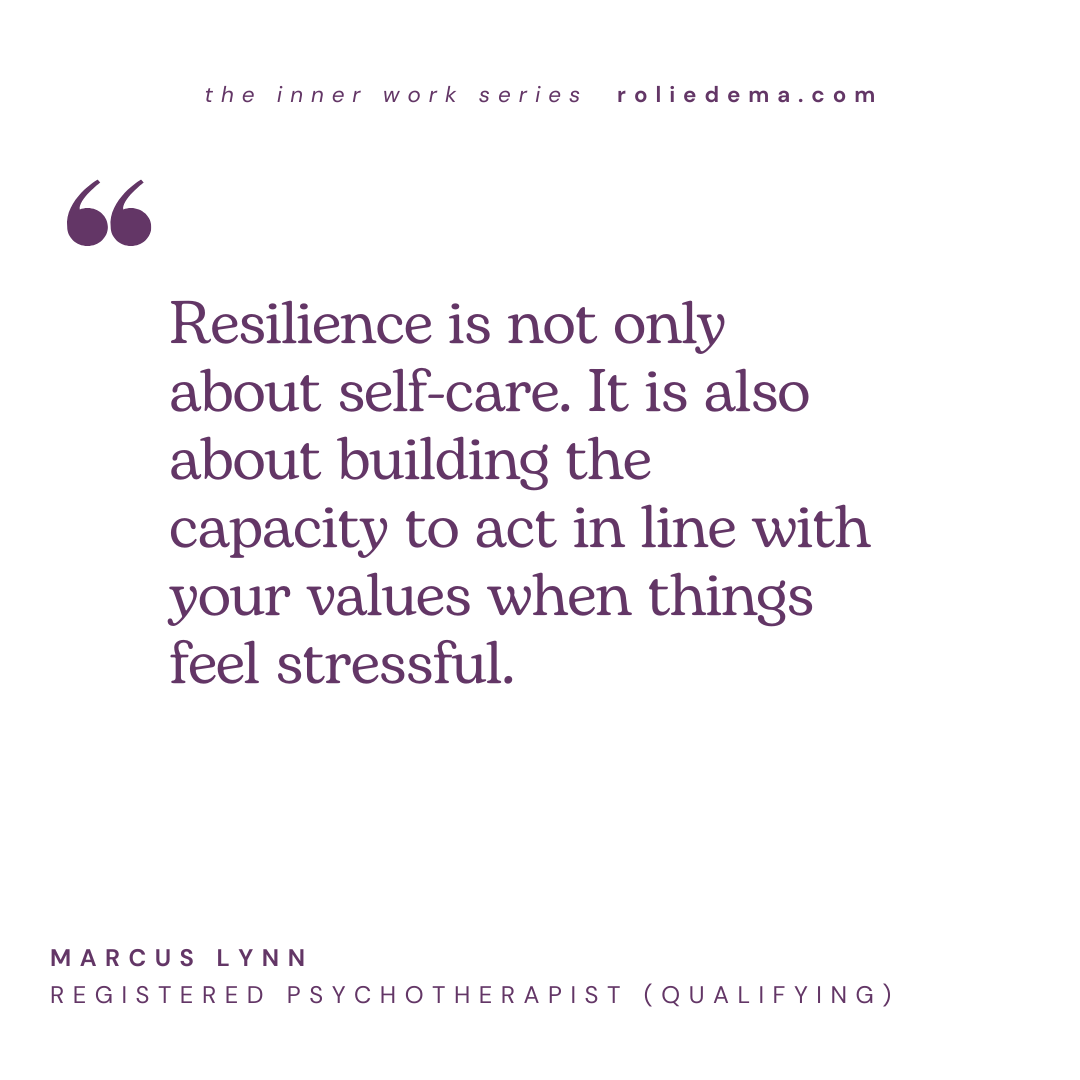
Resilience is not only about self-care. It is also about building the capacity to act in line with your values when things feel stressful. You grow that capacity through practice, not through waiting to feel ready.
Start small and specific. Choose one area you want to strengthen, then pick a daily action that feels mildly intimidating but doable.
For example, ask one clear question instead of hinting, make one honest request, practice one boundary sentence, or start one conversation you would normally avoid.
When you do this regularly, you build confidence through evidence. You are teaching your nervous system that discomfort is survivable, and that you can handle more than your fear predicts.
Q3. What’s one question you wish more people asked themselves (or their therapist)?
A question I wish more people asked is: "Who taught you to behave this way?"
Not to blame anyone, but to understand what your nervous system learned.
Most of our patterns started as solutions. At some point, a behavior helped us stay safe, avoid conflict, earn approval, or manage uncertainty.
When we see that, change becomes more realistic. If you learned a strategy, you can learn a new one. This question often reveals beliefs that made sense back then, but may be outdated now.
With that awareness, people can respond more intentionally to their needs and move through the world with more choice.
Q4. Recommend a favorite resource:
A favorite resource I recommend is How Emotions Are Made by neuroscientist Lisa Feldman Barrett.
Many people were never taught the basics: what emotions are, how they form, and what it actually means to "process" them.
The book is more academic than a typical self-help read, but it is incredibly useful.
One of the central ideas is that the brain makes meaning from bodily sensations and context, and that our emotion labels shape what we feel.
If you want to make it practical, read a chapter at a time and write a one-sentence takeaway you can apply that week.
For example, when you feel anxious, practice labeling it more specifically and asking what it is trying to protect.
The goal is not to become a neuroscientist. It is to build a more intelligent, kinder relationship with your emotions and your body.
Q5. What’s one myth about therapy you’d love to bust?
A myth I would love to bust is that you should wait until things are "serious enough" before going to therapy.
I get it. Therapy can be expensive, and people want to make sure it is worth it.
At the same time, waiting usually raises the cost of change. The longer a pattern runs, the more it spreads into your relationships, your self-esteem, and your daily functioning.
Therapy isn't a magic pill and therapists aren't mind magicians. The most common kind of progress is gradual. Small steps add up.
Starting earlier often means fewer layers to untangle, clearer goals, and faster momentum. It is easier to course-correct early than to rebuild after things have become overwhelming.
Find Marcus Lynn
Enjoyed reading Marcus Lynn's insights and answers to the above questions? Please visit his website, therealisttherapist.com and additional links below to connect with him and learn more about his work.
Marcus Lynn's Links:
Thanks for reading! If you liked this content, share with a friend:
You might also like...
Inner Work with Dr. Shervin Vakili | What is Emotional Resilience?
In this spotlight interview, Calgary therapist Dr. Shervin Vakili shares unique insights on emotional resilience and making space for strong emotions.
Inner Work with Rume Dedekuma | Your Story is Richer Than You Think
In this spotlight interview, therapist Rume Dedekuma shares valuable insights on how to be kind to ourselves while also holding ourselves accountable to grow.
Inner Work with Anna Gwozdz | Unlocking the Root of Avoidance
In this spotlight interview, therapist Anna Gwozdz reveals one way we unconsciously hide from discomfort and prevent real healing and growth in our lives.





Recent Articles


-
4 Reasons the Thing You’re Avoiding Is the Most Important Thing to Do
Apr 25, 26 03:44 PM
 The thing you keep avoiding isn’t random. Here are 4 reasons why doing the hard thing is often the key to unlocking greater levels of freedom and growth.
 -
5 Ways Slowing Down Can Actually Move You Forward
Mar 30, 26 05:00 PM
 We tend to view slowing down as falling behind, but did you know it can actually lead to significant speed later on? Here's why slowing down moves you forward.
 -
5 Things to Stop Doing If You Want to Feel More Fulfilled
Feb 21, 26 05:35 PM
 Are you unintentionally engaging in behaviours that leave you feeling depleted and empty? Here are 5 things to stop doing if you want to feel more fulfilled.